November 20

Psych 30 Infant Experiments to Deconstruct – Steps of Experimental Method

We’ve collected a number of experiment examples done with infants/toddlers that students can use to deconstruct for the steps of the Scientific Method.

  1. The Visual Cliff
  2. Still Face Experiment
  3. The Strange Situation – Mary Ainsworth
  4. Harlow’s Monkey Experiments
  5. Can Babies Tell Right From Wrong – naughty nice puppets
  6. Object Permanence
  7. Conservation Task – a typical child on Piaget’s conservation tasks


September 25

ELA 10 Narrative Writing Instructions

Here’s an instructional video that introduces the assignment. Watch the first 10 minutes to understand the basics of the assignment.

The other elements, vivid verbs and Showing, Not Telling we will review later together.


Here are some student examples of this type of writing.
Note: It is not a whole short story – you start partway into a story that’s already built up tension. And you are the storyteller.

ELA 10 Narrative Writing 1

ELA A10 narrative2

ela a10 narrative

January 21

ELA 7-8 Holocaust Resources

Our next unit is a Novel Study focusing on a time period in history that’s significant – it involved the attempted extermination of a race of people in Europe, the Holocaust.

Handout 9.0 Pg 3- 4 There are boxes to summarize the information from each of the sections in this pdf (below). There is a video instead for box #2

09. Images rise-of-the-nazis_orig


The following video goes with questions on pg 5 of the handout.

Pg 6 & 7 summarizing with rotating partners

09. Pre-reading on Nazis pt 2 pdf merged

Category: ELA 7/8 | LEAVE A COMMENT
October 3

ELA 7-8 AI Generated Images Expressing Emotions: Step 1 Making Images

We’re studying texts about feeling included or excluded, so we’ve had some fun letting AI Generate images to represent these emotions and thoughts.

  1. Students had to generate a list of words, feelings for what Exclusion feels like. Then the same for what Inclusion feels like.
  2. Then, we used different websites to generate these images in a variety of styles.
    1. The Dream.ai website was great for the variety of styles available, but sometimes the images took a long time to generate. And they, sometimes, weren’t as abstract which takes some of the fun out of the final project.
    2. We used https://magicstudio.com/ai-art-generator/ to easily make images. It was fast, but it doesn’t have a list of styles to pick from. The images made seemed repetitive. So we started adding in the “word list” style names from the Dream.ai website to generate a variety of images. (We maybe want to avoid asking for “tattoo style” on this website, though. lol)
    3. Students have to generate at least 7 images for the Exclusion feelings and 7 images for the Inclusion feeling.
    4. Then they had to select the 5 of each they’re going to use for their presentation.

Here are a variety of the images generated. And a snip of the kinds of “styles” you can request the AI site to make for you.


Category: ELA 7/8 | LEAVE A COMMENT
October 11

A2 Terry Fox – formal letter writing

Watch the Terry Fox video below and create a list of his positive and (potentially) negative characteristics.

  •  Ask them to try to create a list of their own personal positive characteristics, seeing if any overlap with some of Terry’s.
  • They’re to write a formal letter to their parents explaining about:
    • our school’s upcoming Terry Fox Walk Event – what it’s for, it’s goal
    • what their thoughts are of Terry – admire him, curious about him, what they wonder of what his life could have been
    • write about their own personality characteristics they hope to develop as adults, once they get to be Terry’s age.
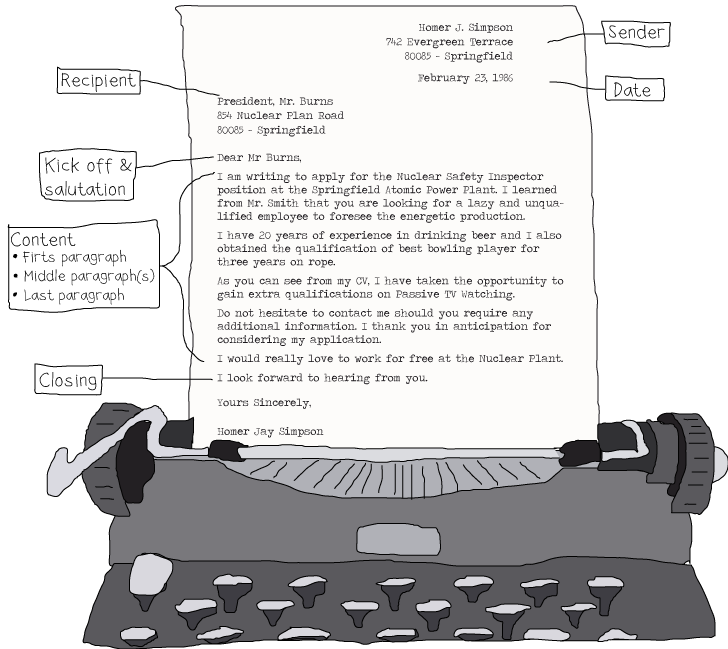
  • Use the outline below to begin a Letter and end it properly.
    Writing formal letters in English - The ultimate guide

Guide for Letter: Intro, Middle (Body), and Ending

Intro:

  • introduce why you are writing to your parents
  • thinking about the Terry Fox walk coming up next week
  • considering the continued impact he’s made; what his legacy is (influence on others)

Main/Body:

  1. Write what your personal thoughts are of Terry Fox. Can include details you know of his background. Consider including what you and others admire about him.
  2. Describe what our walk day will be like: grade groups will be paired together, there will be a route laid out for us, the intent is to raise money for cancer research, there will be donations and a meal at the end.
  3. Compare your personal admirable qualities you’ve identified with those of Terry. What qualities of his might you hope to continue developing as you get older? Consider ideas you might use to inspire others in your own life, like he did.
  4. Connect your letter to our hero unit theme: decide if Terry was a hero and explain your answer to your reader. If yes, why?

Ending:

  • Thank your reader for their time to consider your thoughts.
October 10

A3 Research and Poster

We’re continuing our discussion about what makes someone a hero.

  • We’ve looked at a historical hero, Rosa Parks, and what she did for the civil rights movement. (You practiced summarizing paragraphs.)
  • You’re familiar with Terry Fox and the work he did, and his foundation continues to do, to raise awareness of cancer treatments and research. (You wrote a letter.)
  • Today, you’ll research someone who’s made an impact to the Calgary community along with many parts of the NHL: Chris Snow was the Calgary Flames assistant General Manager. He recently was diagnosed with a degenerative disease, ALS. He passed away last week, but is considered by some as a hero.
    • Your task: research Chris, find out about his background, the qualities he had as a person, how he handled his disease, how the NHL community was supporting him, how he died, and what has happened since his death.
    • You decide if he fits the criteria of a hero and, if so, why.
    • Create a poster about Chris that we’ll hang in the classroom. The purpose of the poster should be to relay the important information about Chris and whether he was or wasn’t a hero.

Overview & legacy of Chris & Kelsie Snow:  https://vm.tiktok.com/ZMjQFhALt/

Flames Snoe family puck drop – legacy. https://vm.tiktok.com/ZMjQNn1af/

Snow testimony on drug trial benefits:

https://vm.tiktok.com/ZMjQFFHHn/


Memorial service for Chris Snow scheduled for October 12 | SaltWire

September 25

ELA 7-8 Heroes Unit

  1. Defining and making a list of Hero examples
  2. Studying a historical figure recognized as a hero for an act of courage:
    1. Rosa Parks:
        1. PDF excerpt of her story – read the paragraphs and try to summarize each. The challenge with summarizing is to include enough of the main points but not too many of them. Do this for the first 10 paragraphs.
        2. Understanding Rosa’s story: YouTube video

      1. Examples of how people were segregated in the United States in the 1950s.
        Nikita Gill on X: "Rosa Parks, an activist of the civil rights movement,  called “the First Lady of Civil Rights” and “The Mother of the Freedom  Movement”. https://t.co/OYvlHmMwGI" / X
        Racial segregation in the United States - Wikipedia

May 31

ELA B10 B8.1 Formal Letter Writing

You are about to write a formal Letter of Complaint. You’re becoming more and more an adult and will be responsible for change in your society. This assignment asks you to pick a topic that you think needs some adjustment or change made and write a persuasive and informed letter to someone specific in a position to create that change.

Examples of social change topics other students have written about include:

  • Writing to the Town of Kenaston to argue against their ban of certain dog breeds
  • Writing to the Saskatchewan Minister of Highways to complain with detailed points the poor upkeep of Highway 11.
  • Writing to the Sask Minister of Land about the maintenance of neighbours changing water routes that affect other people.
  • Writing to the Minister of Health (Federal) or Sask Premier to convince them to allow better access to reproductive health centers, like for abortions or the Plan B Pill
  • Write to the School Division to argue for different use of staffing at your school.
  • Write to your School Division to argue for/against neutral bathrooms being added to the schools.
  • Write to your school Principal about the school dress code. Or to the School Community Council about it, asking for change.
  • Write to your Principal or School Division asking for better maintenance of the school’s field and/or ball diamond.
  • Write to your Principal or School Division asking for funding/development of outdoor seating in the courtyard, like added permanent seating and shade sails. Or write regarding the poor maintenance of the outdoor sports facilities – the ball diamond, jump pits, basketball area, etc.
  • Write to your Principal to argue against the Hat Rule in school.
  • Write to the Sask government regarding their restrictions on tinted windows of vehicles.
  • Write to the Division or principal regarding the plan to develop gender neutral bathrooms in the schools within the division.

Big Note or Warning: If you pick a topic you feel emotionally strong about, what some students fall into doing is write a venting letter about it. If it isn’t grounded in logic, reasoned, or convincing points it may likely do poorly, marks-wise. Write without emotional passion and your recipient may be more inclined to take seriously your concerns. 

Added Advice:
The idea is to develop an argument of some substance that can convince the reader there is something withheld or affecting a fair amount of people. Writing about something that affects mostly just yourself and expressing how it makes you feel is likely not to get a response, and you should be writing with the purpose or intent to receive an actionable response. Try to include the many ways your topic actually impacts people in real ways, not just felt ways.

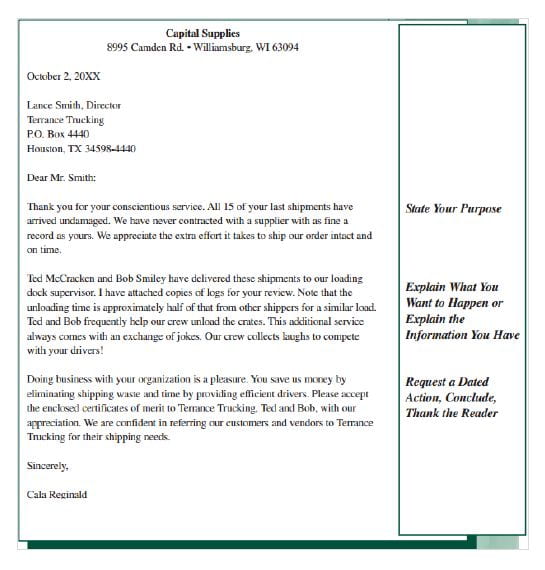
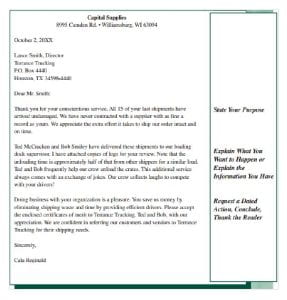
And… there’s a sample mentor letter included in the handout. Follow it to the letter format-wise.
 

Category: ELA B10 | LEAVE A COMMENT
May 12

07 Studying Ideologies

There have been different philosophical thinkers who contributed ideas about the Social Contract countries should adopt, meaning how much power is given to an authority figure, what type of authority, and how many rights do citizens give up in order to gain freedom in their society.

Now we’ll transition to look at the different Established Ideologies – the established approaches to governing, like Conservatism and Liberalism.

What are the goals of the different Canadian parties?


Liberalism Kahoot Review (Link)

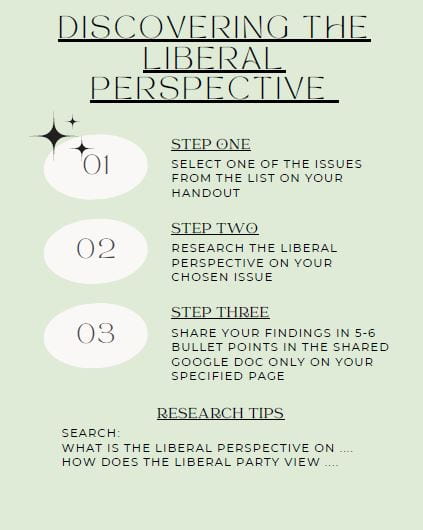
Shared Google Doc – Liberalism Individual Research